


Skip to content

Increase Titer and Modulate CQAs to Drive Analytical Similarity 

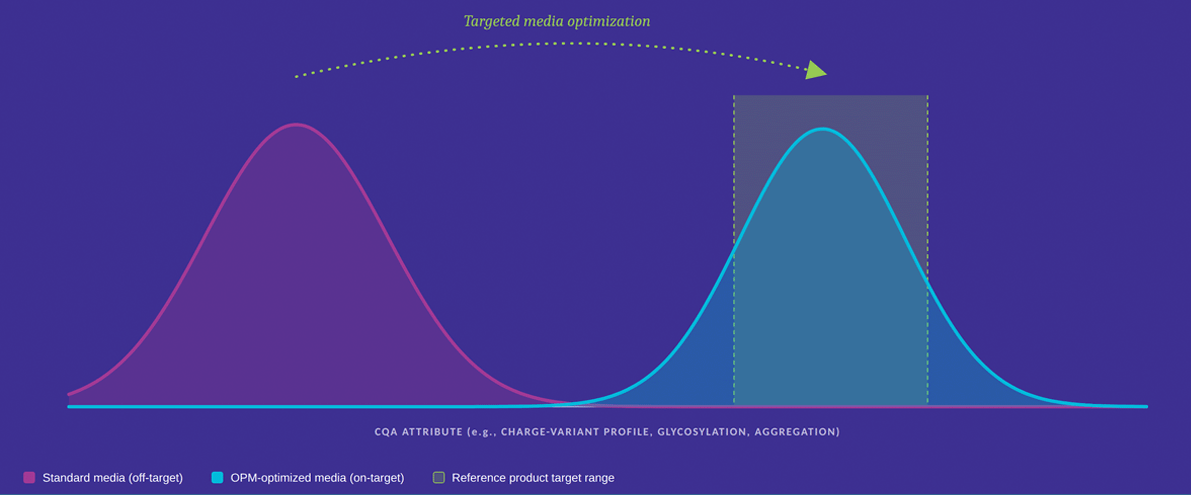
Our Biosimilar Media Optimization Service provides targeted cell culture media development to increase biosimilar titer and to modulate molecule-specific critical quality attributes (CQAs) — shifting them toward your reference product's target profile so you can establish analytical similarity earlier in development, with fewer iterative development cycles.

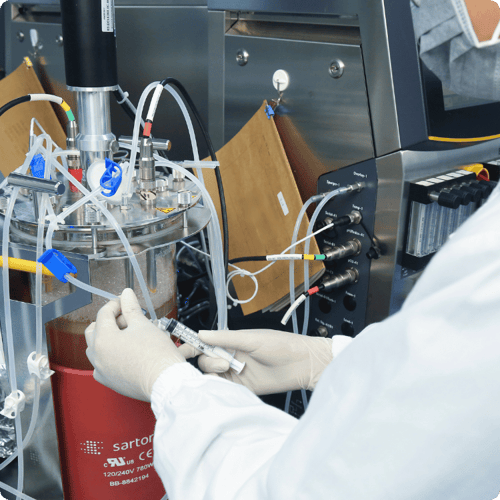
Scientist operating a bioreactor for biosimilar cell culture media optimization

When There's A CQA Gap

Titer and productivity are only part of the equation. Even a high-expressing clone can yield a candidate protein whose critical quality attributes (CQAs) fall outside the range needed to demonstrate analytical similarity to the reference product.

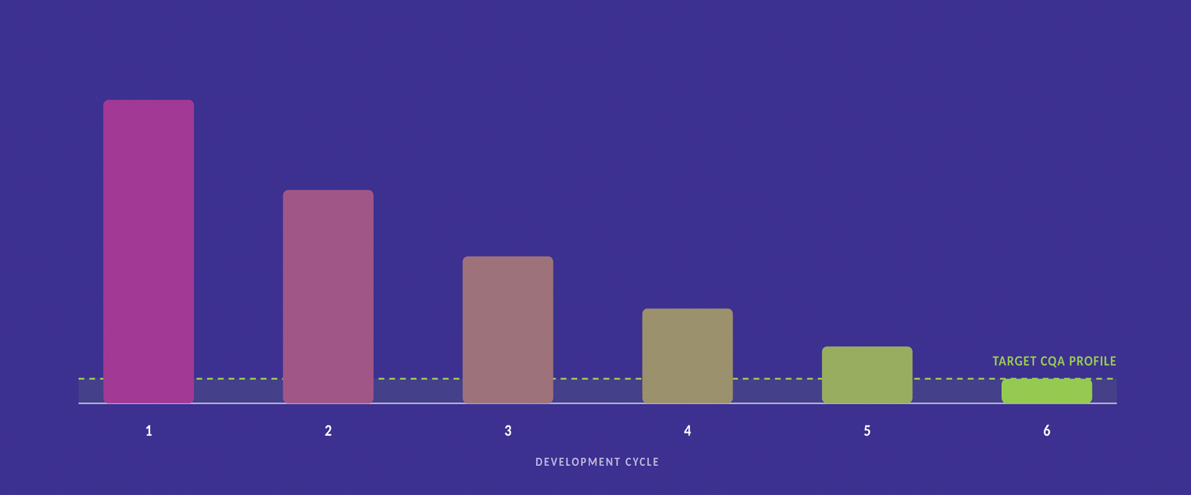
Left unaddressed, the gap becomes structural: cell lines, processes, and comparability strategies are locked in early, leaving little room to correct course. Teams end up in repeated rounds of process changes and analytical testing that stretch timelines and budgets.

This is where our service comes in: by modulating the CQAs through cell culture media optimization, we help you close the CQA gap.

Off target_scientist_transparent-1

Targeted Media Optimization to Modulate Your CQAs

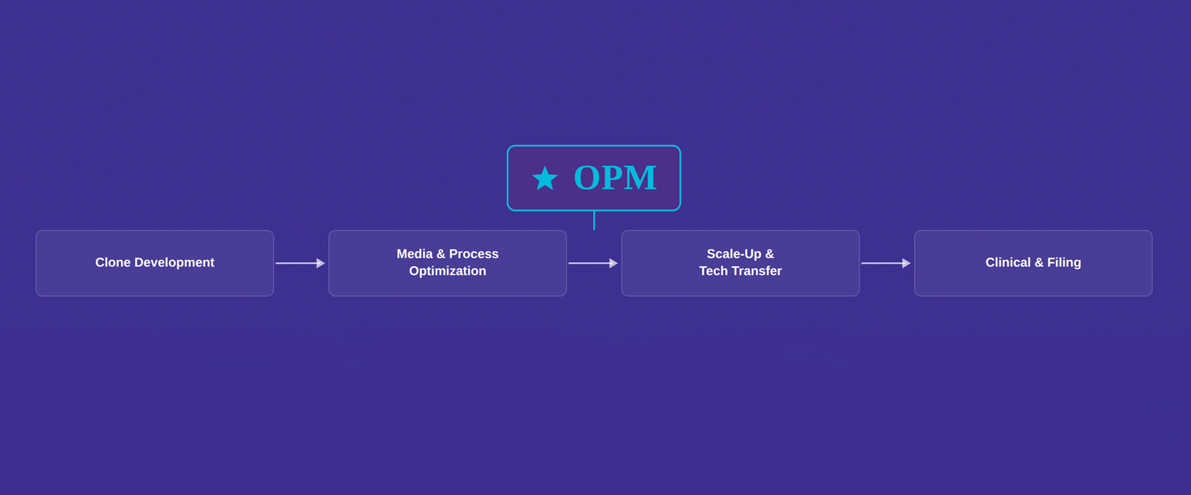
OPM applies molecule-specific media optimization — built on our chemically defined media platform — to close the CQA gap directly, without a new cell line development cycle. Our approach:

•	Shifts key CQAs toward the reference-product target profile

Shift Key CQAs Toward The Reference Product Target Profile

Modulating charge variants, glycosylation, and other critical attributes through targeted media component adjustments
Reduce iterative Development Cycle

Reduce Iterative Development Cycles

By identifying the media changes that move CQAs in the right direction faster

Earlier Analytical Similarity Earlier in Development

Establish Analytical Similiarity Earlier in Development

So biosimilarity data is available sooner, when it has the most influence on program decisions


Option 1
End-to-End Service

OPM manages media development and CQA analysis from start to finish, with minimal customer involvement after kickoff.

Ideal for biosimilar sponsors who want a fully managed program with minimal internal lift.

  • Customer: Provide clone, reference product, and other relevant information
  • OPM Phase I: Data analysis + medium design; first-round optimization + CQA analysis
  • OPM Phase II (Optional): Second-round optimization + CQA analysis 
  • OPM Phase III: Medium validation in 1-2 L bioreactors; CQA confirmation 

Option 2
Flexible Service

A collaborative model where OPM develops and optimizes media using CQA data your team generates in-house. 

Ideal for biosimilar sponsors that already have CQA analytics capabilities in place and want a more collaborative approach.

  • Customer: Provide clone, reference product, and other relevant information
  • OPM Phase I: Data analysis + medium designs; first-round optimization
  • Customer: Analyze CQA from round 1 optimization
  • OPM Phase II (Optional): Second-round optimization
  • Customer: Analyze CQA from round 2 optimization
  • OPM Phase III (Optional): Medium validation in 1 - 2 L bioreactors
  • Customer: Confirm CQA from bioreactor runs
Project Showcase

Modulating Charge Variants to Match Control

In a representative optimization project, OPM's media and process optimization modulated charge-variant (CEX%) levels across the acidic, main, and basic species, bringing each into alignment with the control and closing a gap that existed before optimization. Glycosylation levels were modulated as well.

This shift — restoring off-target charge-variant and glycosylation profiles to match the reference or control — is the practical outcome of the service: a measurable, analytically demonstrable move toward similarity.

Media and process optimization modulated charge variants to levels comparable to the control
1  Media optimization modulated charge variants to levels comparable to the control.
Media optimization modulated glycosylation to levels comparable to the control
2 Media optimization modulated glycosylation to levels comparable to the control.

FAQ

What is biosimilar media optimization?

Biosimilar media optimization is the process of adjusting cell culture media formulations to shift a biosimilar candidate's critical quality attributes (CQAs) - such as charge variant distribution or glycosylation - toward those of the reference product, closing analytical similarity gaps that standard media can't address.

Why isn't high titer enough to make a biosimilar?

Titer measures how much protein a cell line produces, not whether that protein matches the reference product's critical quality attributes. A high-titer clone can still produce a molecule with charge variants, glycosylation patterns, or other CQAs outside the target range, which means it isn't yet analytically similar to the reference product. 

What are critical quality attributes (CQAs) in biosimilar development?

CQAs are the physical, chemical, biological, or microbiological properties of a biologic - including charge variants (acidic, main, and basic species), glycosylation, and aggregation - that must fall within an appropriate range to ensure product quality and, for a biosimilar, analytical similarity to the reference product. 

How does media optimization affect charge variants?

Targeted adjustments to cell culture media composition can shift the distribution of acidic, main, and basic charge variant species produced during cell culture, moving them closer to the levels seen in the reference product or control. 

Can OPM manufacture the optimized media at GMP scale?

Yes. As an optional final phase, OPM can manufacture the validated, optimized media at its GMP sites and provide regulatory documentation support. 

What is a biosimilar CMC gap?

A biosimilar CMC (chemistry, manufacturing, and controls) gap is a mismatch between a biosimilar candidate's manufactured attributes and its reference product's attributes, most often identified through analytical comparability testing. A CQA gap - such as an off-target charge variant profile - is one of the most common forms of CMC gap, and it's what OPM's media optimization service is designed to close. 

What is analytical comparability in biosimilar development?

Analytical comparability is the head-to-head testing of a biosimilar candidate against its reference product across critical quality attributes - including charge variants, glycosylation, and aggregation - to confirm the two molecules are similar enough to support a biosimilar development program. 

Related Products and Services

align-center

OPM-CHO Cell Culture Media

High-performance basal and feed media designed for various CHO cell lines. 

align-center

Custom Media Develompment

Tailored media development service that boost titers and enhance quality

align-center

CDMO Services

Services range from cell line development through commercial manufacturing